
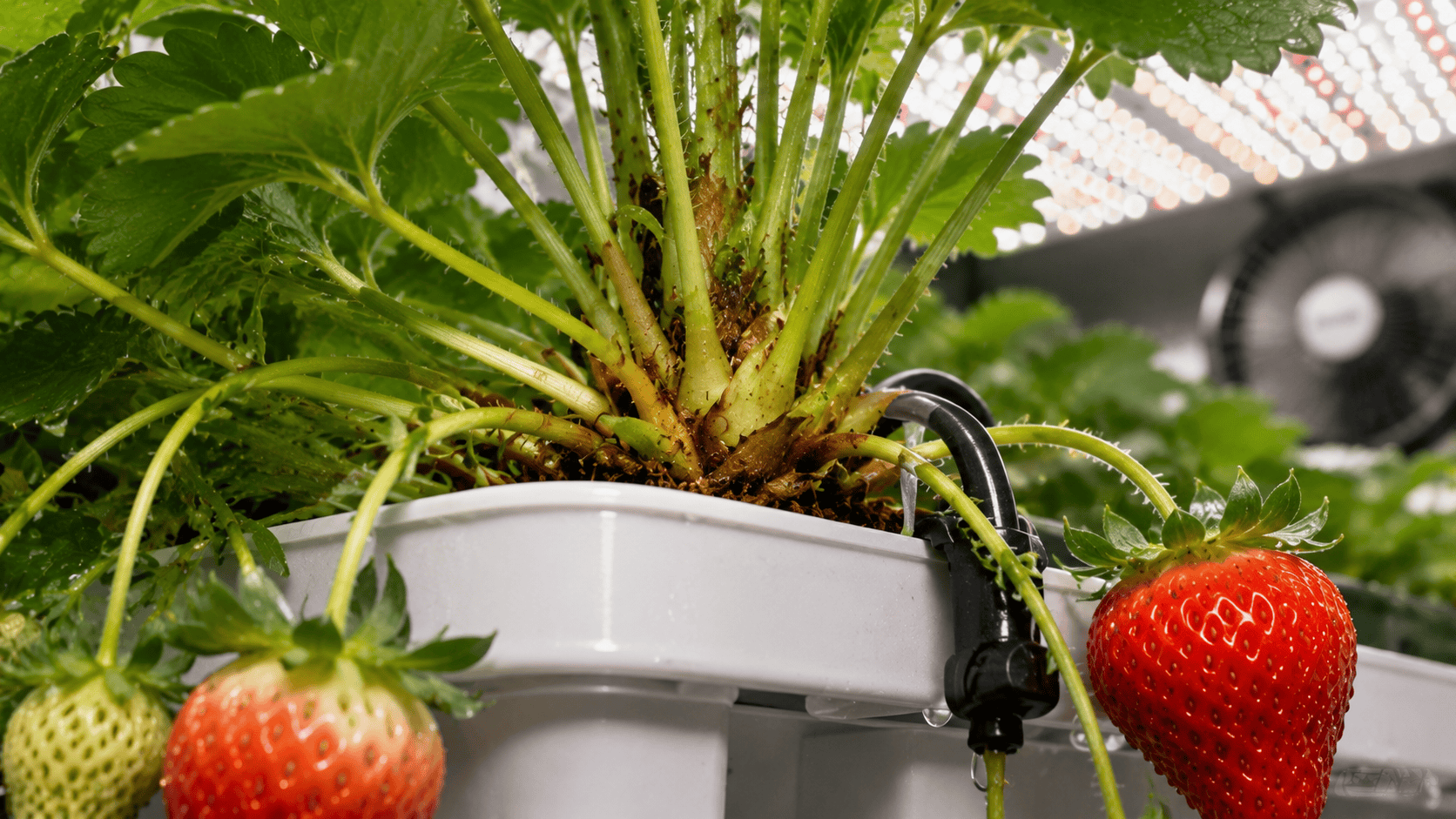
Growing strawberries in a grow tent is one of the easiest ways to enjoy fresh berries year-round when you have the right setup. The best grow tent setup for strawberries combines day-neutral varieties, full-spectrum LED lighting, steady airflow, and good climate control.
Popular varieties like Albion produce fruit over a long season, making them a great fit for indoor growing. A few smart choices early on can make caring for your plants much easier. Keep reading to learn how to build best grow tent setup for strawberries step by step.
Best Grow Tent Setup for Strawberries Checklist
- A 2×4 ft or 3×3 ft grow tent is suitable for many indoor strawberry setups with enough space for equipment and plant care.
- Day-neutral varieties, full-spectrum LED lighting, and stable humidity are essential for consistent berry production.
- Healthy roots and proper pollination play a critical role in maintaining indoor strawberry plant performance.
Selecting the Ideal Tent Size for Strawberries
Strawberries stay low and spread outward, so floor space matters more than height. A 2×4 ft tent can hold around 8 to 12 plants when using shelves, containers, or NFT channels.
So, choose the tent based on your layout, not the biggest option available. A packed grow room can trap moisture and limit airflow. That’s a common mistake for new indoor growers.
Small setups often make plant care easier because problems are easier to spot. Check leaves, roots, and flowers often.
| Tent size | Best use | Plant capacity | Setup style |
| 2×4 ft | Home gardens | 8 – 12 plants | Containers or NFT |
| 3×3 ft | Flexible setups | 10 – 15 plants | Soil or hydro |
| Larger tents | Higher output | 20+ plants | Large layouts |
A strawberry grow tent kit does not need extra height. Most standard 5 – 6 ft tents provide enough room for LED fixtures, fans, and plant growth.
Focus on:
- Open plant spacing
- Even light coverage
- Easy maintenance access
A shorter tent with better airflow can beat a tall tent with poor lighting. That’s something many beginners miss.
LED Lighting Requirements for Indoor Strawberry Growth
Full-spectrum LED lights are the usual choice for indoor strawberries because they provide the light needed for leaf growth, flowers, and fruit. They also create less heat than older lighting options.
A strawberry grow light setup should change as plants develop. Young plants need enough light for growth, while fruiting plants need stronger intensity.
Controlled environment agriculture studies published by university extensions demonstrate that maintaining PPFD levels between 400 and 600 µmol/m²/s during the generative stage directly optimizes crown carbohydrate distribution, increasing total soluble solids (Brix) in strawberry fruits.
| Growth stage | Light target | Daily schedule |
| Vegetative growth | 250 – 350 µmol/m²/s PPFD | 14 – 16 hours |
| Flowering and fruiting | 400 – 600 µmol/m²/s PPFD | 12 – 14 hours |
A 150W – 250W full-spectrum LED fixture usually fits a typical 2×4 ft strawberry tent. Keep the light around 12 – 18 inches above the plant canopy, then adjust based on heat and plant response.
Watch for these signs:
- Curled leaves
- Heat stress
- Uneven growth
Lower light is not always better. But more power does not fix every problem either. Plants still need proper cooling and airflow.
Maintaining Stable Temperature and Humidity Indoors
Strawberries prefer cooler conditions than many indoor crops. Stable temperature and humidity help protect flowers, roots, and fruit.
Agricultural crop guidelines establish that strawberry floral initiation declines significantly when canopy ambient temperatures exceed 26°C (78°F). Maintaining a strict day-night temperature differential prevents flower abortion and heat-induced tip burn.
| Growth stage | Temperature | Humidity |
| Vegetative stage | 18 – 24°C (65 – 75°F) | 60 – 70% RH |
| Flowering and fruiting | 18 – 22°C (65 – 72°F) | 50 – 60% RH |
Enforcing a nighttime drop to 10 – 13°C (50 – 55°F) reduces respiration rates, allowing the plant to retain synthesized sugars within the fruit structure rather than expending energy on metabolic maintenance.
Research from Ohio State University Indoor Berry Program shows:
“When average daily temperatures exceed 26°C (79°F), flower development is significantly delayed, even for short-day cultivars that would otherwise initiate flowering under appropriate photoperiods.” – Ohio State University Indoor Berry Program
A strawberry grow tent ventilation setup usually includes:
- 4-inch inline fan
- Oscillating fans
- Dehumidifier support
Positioning dual oscillating fans directly across the canopy level breaks static boundary layers, inhibiting spores of powdery mildew (Podosphaera aphanis) and gray mold (Botrytis cinerea). Maintaining relative humidity below 60% during bloom also suppresses two-spotted spider mite reproduction.
Choosing the Best Growing System for Indoor Strawberries
The right growing system depends on your experience, available time, and harvest plans. Coco coir, drip irrigation, and hydroponic channels all have different strengths.
Transitioning from Deep Water Culture (DWC) to drip-to-waste coco coir channels significantly reduces root rot risks. Submerging strawberry root systems in standing water frequently leads to anaerobic conditions, whereas a 70/30 coco-perlite substrate ensures necessary oxygen saturation around the root zone.
| System | Advantages | Challenges |
| Coco + perlite | Good drainage | Needs watering control |
| NFT channels | Efficient roots | Needs monitoring |
| Drip irrigation | Flexible setup | Pump needed |
| Soil containers | Easy care | Uses more space |
A 70/30 coco coir and perlite mix is popular because coco holds moisture while perlite adds air around roots. Watering habits matter. Strawberry roots need moisture, but they also need oxygen.
A beginner setup often includes:
- 1-gallon containers
- Coco-perlite mix
- Drip irrigation
- pH tools
Hydroponic systems can produce strong results, but they need closer attention. NFT channels and drip systems usually perform better than setups where roots stay in stagnant water.
Preventing Strawberry Root Crown Problems in Hydroponics
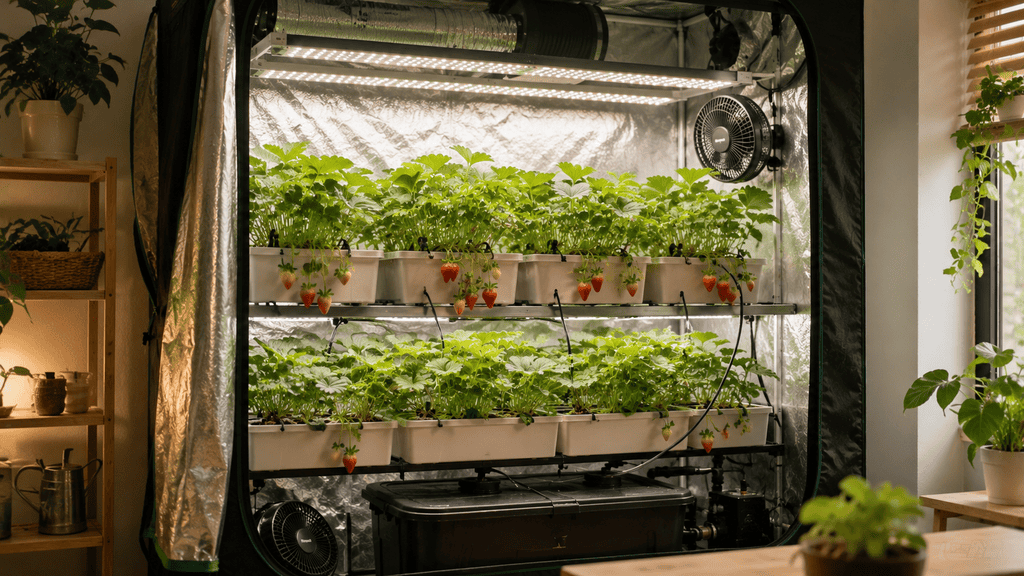
The strawberry crown needs special care. It connects the roots and leaves, and too much moisture around this area can damage the plant.
Bare-root crowns must sit precisely 2 – 3 millimeters above the media line during transplanting. Washing excess substrate away from the crown base using a pressure syringe during initial setup prevents moisture entrapment, eliminating the primary cause of crown rot (Phytophthora cactorum) in closed tents.
Growers can help protect crowns by:
- Placing crowns high in net pots
- Using airy media
- Controlling nutrient flow
Insights from Frontiers in Plant Science indicate:
“Progressive root mat development over a six-month fruiting cycle degrades passive film aeration and creates hypoxic conditions that impair root membrane integrity” – Frontiers in Plant Science
No mystery here. Healthy roots usually lead to healthier plants. A good indoor strawberry system treats the root zone with the same care as the leaves. Strong roots help plants handle flowering and fruit production better.
pH, EC, and Nutrient Management for Strawberries
Indoor strawberries need careful feeding. Too much fertilizer can damage roots and reduce fruit quality. A balanced nutrient solution helps plants absorb what they need without creating extra stress.
For hydroponic strawberry systems, many growers aim for:
| Nutrient factor | Recommended range | Why it matters |
| pH | 5.8 – 6.2 | Helps nutrient uptake |
| EC | 1.2 – 1.8 mS/cm | Controls feeding strength |
| Root oxygen | High | Supports healthy roots |
Start lower when plants are young. Then increase nutrients as flowering and fruit production begin.
A basic feeding routine:
- Check pH often
- Monitor EC levels
- Adjust slowly
Maintaining a low Electrical Conductivity (EC) range of 1.0 to 1.2 mS/cm during the vegetative stage prevents leaf tip burn caused by salt accumulation. Escalating EC above 1.8 mS/cm during fruiting inhibits root water absorption, resulting in stunted, tart berries. It usually does not.
Different systems need different approaches. A coco grow tent may dry faster than an NFT setup, so watering and feeding schedules will not always match.
Best Strawberry Varieties for Indoor Grow Tent
Day-neutral strawberries are usually the best choice for indoor growing. They can flower without depending heavily on seasonal changes. Unlike June-bearing varieties, day-neutral types can continue producing fruit under stable indoor conditions.
Popular choices include:
| Variety | Main strength | Indoor benefit |
| Albion | Flavor and firmness | Reliable fruit quality |
| San Andreas | Yield and size | Good for small spaces |
| Seascape | Consistent harvests | Handles changes well |
Albion is one of the most common indoor choices because the berries are firm and flavorful. San Andreas and Seascape also perform well in smaller grow spaces.
June-bearing strawberries can be harder indoors because many varieties need a chilling period before normal flowering. Some require hundreds of hours below 7°C (45°F).
So choose genetics that match the room.
Focus on:
- Day-neutral plants
- Compact growth
- Longer harvest periods
A strong variety still needs the right environment. Poor lighting or weak airflow can hurt even excellent plants.
Effective Pollination Techniques for Grow Tent Strawberries
Indoor strawberries need help with pollination. Grow tents do not have bees or other natural pollinators moving between flowers.
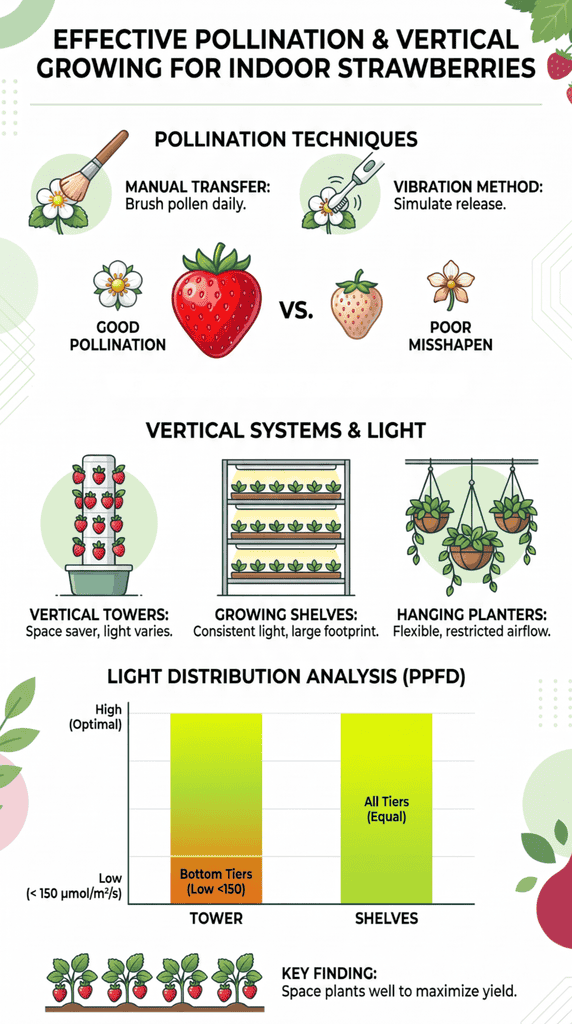
Daily manual pollination using a fine soft-bristled brush or an electric toothbrush base applied gently to the flower stem ensures full pollen distribution from stamens to pistils, preventing misshapen, unfertilized fruit.
Good pollination improves berry shape and size. Poor pollination often leads to small or misshapen fruit.
Common problems include:
- Uneven berries
- Small fruit
- Poor development
Some growers also use gentle vibration methods, such as lightly touching flower clusters with an electric toothbrush handle, to help move pollen.
Indoor growing removes some natural processes. So growers have to replace them.
Vertical Strawberry Growing Systems for Indoor Spaces
Vertical strawberry systems can save space, but they need careful design. More plants in a smaller area sounds great. Yet crowded setups often create problems. Poor spacing can reduce light access and trap humidity around leaves.
| Layout | Benefits | Possible issue |
| Vertical towers | Saves floor space | Lower plants may get less light |
| Shelves | Better light control | Uses more room |
| Hanging planters | Flexible placement | Airflow can suffer |
Vertical stacking towers in standard 2×4 ft grow tents frequently lead to uneven PPFD levels, where lower tiers receive under 150 µmol/m²/s. Single-tier horizontal gutter systems or stepped shelving ensure equal light distribution and prevent stagnant humidity pockets. More plants does not always mean more strawberries. Give each plant room to grow.
Building a Low-Maintenance Strawberry Grow Tent System
How to grow indoors hydroponic strawberries at home year round
Credit: Ditch The Flock
A good strawberry grow tent setup does not need a lot of extra equipment. The focus should be on keeping the growing conditions steady and making daily care easier.
Timers, sensors, and irrigation controls can help manage the basics without constant adjustments. A practical setup usually includes:
- LED timer
- Humidity sensor
- Drip irrigation
- pH meter
- EC meter
Regular checks also help prevent small issues from turning into bigger ones. Once a week, remove old leaves to improve airflow, inspect the roots for problems, and clean your equipment. Check for pests several times a week because indoor gardens can give insects and plant diseases a chance to spread quickly.
Spider mites, fungus gnats, and powdery mildew are some of the common problems strawberry growers watch for indoors.
Keep tools clean.
Remove damaged leaves.
Check plants often.
Simple routines matter. A few minutes of care can help keep strawberry plants healthier and make the whole system easier to manage.
Maximizing Indoor Strawberry Harvests Year Round
Good harvests come from balance. Light, temperature, roots, and pollination all work together.
A productive strawberry tent focuses on:
| Area | Main focus |
| Lighting | Correct PPFD and timing |
| Climate | Stable temperature and humidity |
| Roots | Moisture and oxygen balance |
| Pollination | Healthy flower development |
Cooler nights may help improve flavor because strawberries can develop more sugars under controlled conditions.
Other helpful practices:
- Remove extra runners
- Trim old leaves
- Check crowns regularly
- Clean irrigation parts
Get the basics right first.
A small healthy system can outperform a large setup with unstable conditions. That’s the part many new growers overlook.
Building the Best Grow Tent Setup for Strawberries
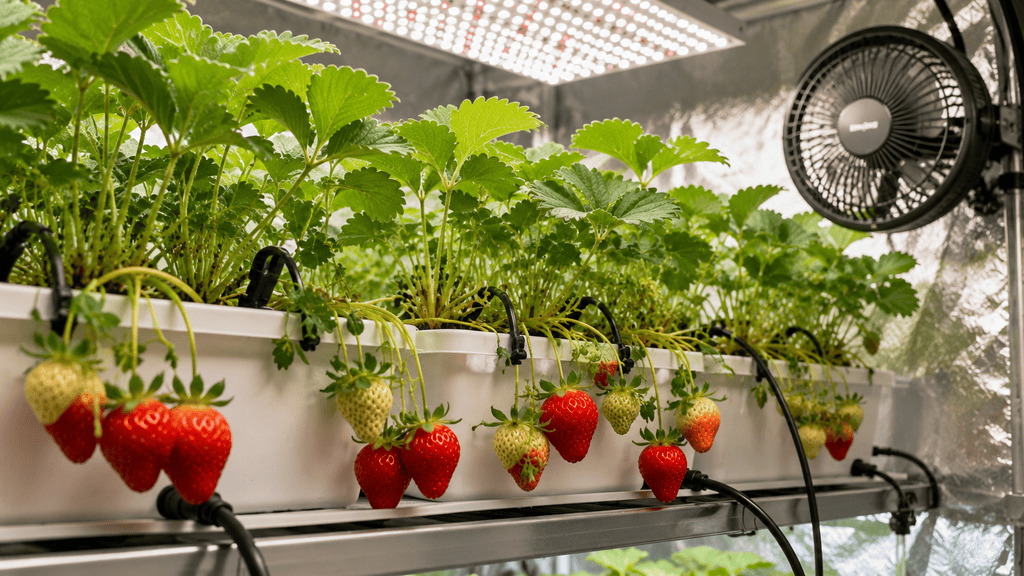
A complete strawberry grow tent setup combines lighting, airflow, irrigation, and plant support. The parts need to work together.
A basic setup process:
- Pick a tent size that fits the space.
- Match LED power to plant needs.
- Add fans and climate controls.
- Set up irrigation and nutrients.
- Adjust as plants grow.
Growers comparing hydroponic equipment can use Top Hydroponic Garden as a reference when looking at indoor growing systems and components.
The setup does not need to be complicated. A stable environment matters more than adding extra equipment.
FAQ
What lighting setup do strawberries need inside a grow tent?
Strawberries need consistent light to support healthy leaves, flowers, and fruit development. A proper strawberry grow light setup with full spectrum grow lights helps plants receive the energy needed for photosynthesis. The light schedule for strawberries should match their growth stage to encourage steady flowering and improve indoor strawberry cultivation results.
How do I control temperature and humidity in a strawberry grow tent?
Maintaining stable conditions is important for healthy strawberry growth indoors. Strawberry temperature control helps prevent plant stress, while proper grow tent humidity for strawberries supports flowering and fruit production. Use reliable airflow and monitoring methods to maintain a balanced environment. A good strawberry grow tent ventilation system also reduces excess moisture and improves overall plant health.
Can I grow strawberries vertically inside a grow tent?
Yes, vertical strawberry growing is a practical option for limited spaces. A vertical grow tent strawberries setup allows more plants to grow in a smaller area while keeping maintenance easier. Strawberry towers in grow tents, shelves, and hanging systems can improve space usage. This method works well for indoor berry gardening when light and airflow are properly managed.
What strawberry varieties are suitable for indoor growing?
The best strawberry varieties for indoors are types that can adapt well to controlled environments and produce fruit over longer periods. Everbearing strawberries indoors and day-neutral strawberries indoors are popular choices because they can continue flowering under stable conditions. Choosing suitable varieties helps improve year-round strawberry growing and creates more consistent indoor strawberry harvests.
Build a Strawberry Grow Tent That Keeps Producing
Growing strawberries indoors gets frustrating when plants stop flowering or produce small fruit, even after you’ve done everything right. That’s normal. The good news is that steady care usually makes the biggest difference. Keep your setup stable, watch how your plants respond, then make small changes when needed.
Sourcing specialized equipment, such as full-spectrum LED fixtures, calibrated pH/EC meters, and drip irrigation kits, from dedicated indoor gardening suppliers like Tophydroponicgarden provides the technical foundation required for consistent long-term yields. Maintaining precise environmental controls remains the primary factor in achieving reliable year-round strawberry harvests.
References
- https://pubs.acs.org/jafcau/article-abstract/54/2/441/3709627/The-Influence-of-Different-Electrical-Conductivity
- https://scholar-cnki-net-443.webvpn.imac.edu.cn/zn/Detail/index/GARJ2021_5/SJMDA77EB08EF0698EBEF3A985564B5D8FD0
Related Articles
- https://tophydroponicgarden.com/how-to-manage-water-temperature-effective/
- https://tophydroponicgarden.com/nft-system-setup-for-growing-strawberries/
- https://tophydroponicgarden.com/how-to-grow-hydroponic-strawberries-at-home/
Was this helpful?
