

Leafy greens often perform well in hydroponics, especially in ebb and flow systems. The flood-and-drain cycle delivers water and nutrients while allowing roots to absorb fresh oxygen during drainage, supporting healthier growth.
Unlike soil, hydroponics provides more control over moisture, nutrients, and root conditions, which can lead to faster and more consistent results. However, different crops respond differently.
Some benefit greatly from flood cycles and root aeration, while others may perform better in NFT or drip systems. This guide covers the best crops, flood schedules, growing media, and common mistakes to avoid.
Ebb and Flow Quick Reads
- Some plants thrive in ebb and flow systems. Leafy greens, herbs, tomatoes, peppers, and other vigorous crops often benefit from the flood-and-drain cycle.
- Alternating wet and dry periods support healthier roots. Regular flooding delivers nutrients, while draining increases oxygen around the root zone.
- Crop selection and system settings matter. The right flood schedule, growing media, and plant choice can improve growth rates, plant health, and harvest quality.
These three factors explain why certain plants consistently produce better results in ebb and flow hydroponic systems.
Which Plants Benefit Most From Ebb and Flow?
Fruiting crops, herbs, leafy greens, strawberries, and ornamental flowers are among the strongest performers in ebb and flow hydroponics plants.
Closed-loop hydroponic systems can significantly reduce water use compared with traditional soil cultivation because water and nutrients are recirculated within the system.
The best plants for ebb and flow include:
- Tomatoes
- Peppers
- Cucumbers
- Strawberries
- Basil
- Mint
- Lettuce
- Swiss chard
- Radishes
- Marigolds
These crops are commonly selected because they combine strong growth rates, efficient nutrient uptake, and reliable harvest production in flood-and-drain environments.
These crops benefit from the combination of nutrient-rich water delivery and oxygen exposure created by ebb and flow draining cycles.
Why Do Some Plants Prefer Ebb and Flow Systems?

The flood-and-drain cycle delivers nutrients while exposing roots to oxygen between irrigations.
Many crops grown in a dedicated flood-and-drain layout succeed because their roots receive two distinct physical advantages during every single timer cycle. First, the flooding phase supplies water and nutrients. Second, the draining phase exposes roots to oxygen-rich air.
Hydroponic crops can often grow faster than soil-grown plants under controlled conditions because growers can optimize water, nutrients, and environmental factors.
Roots require dissolved oxygen (DO) to support respiration, nutrient transport, and cellular activity. Most hydroponic crops perform best when nutrient solution DO levels remain above 5 mg/L.
During drainage, air is pulled into pore spaces within the growing media, increasing root-zone oxygen availability and supporting active root growth.
Research from Bhattarai, S.P., & Midmore, D.J. shows
“oxygation” (aeration of the nutrient solution) in a flood and drain system with rockwool substrate increased dry matter yield by 12%, leaf photosynthesis by 11%, and water use efficiency by 39% in Chinese cabbage. These benefits were mediated through enhanced root processes such as increased fibrous root mass (33%), wider conducting tissues and efficient nutrient utilization by the plant when the rhizosphere was oxygated. – CQUniversity
Why root oxygenation matters
Root oxygenation plays an important role in hydroponic growth by supporting healthy root function and nutrient absorption. These benefits are documented in hydroponic management guides from OSU Extension.
- Improves nutrient uptake efficiency
- Supports vigorous root development
- Encourages faster vegetative growth
- Reduces prolonged saturation stress
Large fruiting crops often gain the greatest benefit. Tomatoes, cucumbers, and peppers have higher metabolic demands than many leafy greens, making ebb and flow root oxygenation particularly valuable during rapid growth periods.
Which Fruiting Plants Thrive in Ebb and Flow?
Large fruiting plants are among the strongest matches for ebb and flow system plants.
High-density tomato production in ebb-and-flood systems has been documented in commercial research in ebb-and-flood cultivation systems.
| Plant | Why It Performs Well |
| Tomatoes | Tomatoes develop extensive root systems and can produce high yields when flood frequency and nutrient availability remain consistent throughout fruit production. |
| Peppers | Peppers typically perform well at EC levels of 2.0–3.5 mS/cm and benefit from increased irrigation frequency during heavy fruit set. |
| Cucumbers | Cucumbers grow rapidly and require frequent nutrient delivery, making them well suited to regular flood-and-drain cycles. |
| Melons | Large root systems |
| Strawberries | Proven commercial performer |
Tomatoes receive significant attention because they develop extensive root systems and consume large amounts of nutrients throughout vegetative and fruiting stages.Peppers also perform well in ebb and flow tray plants.
Once my peppers shift from vegetative growth to heavy fruit-set, I manually increase our daytime flood schedule from three cycles to four cycles. This fulfills the plant’s spiking water demand without oversaturating the underlying media.
Whenever I transplant a soil-started clone into an active flood tray, I notice a predictable pattern: the plant pours its energy into building a dense, bright-white root mass before you ever see a massive explosion of canopy or fruit. That root structure frequently determines later productivity.
Do Leafy Greens Actually Need Ebb and Flow?
They grow well in ebb and flow, although some growers also use NFT systems.
Leafy greens remain among the most popular flood and drain plants because they grow quickly, require moderate nutrient levels, and adapt well to different substrates.
If you’re planning a multi-crop tray, leafy greens and herbs are the perfect companions. Butterhead lettuce, smooth-leaf spinach, Tuscan kale, and sweet basil usually adapt well to frequent, shorter flood cycles.
Lettuce varieties such as Green Butter Lettuce, Salanova Lettuce, and Frilled Lettuce respond well to periodic flooding.
That said, NFT systems may outperform ebb and flow commercial growing operations focused exclusively on lettuce. Continuous nutrient flow supports large-scale production with relatively simple infrastructure.Commercial NFT lettuce systems often support higher planting densities than traditional flood trays.
Typical lettuce nutrient levels remain around 0.8–1.2 mS/cm EC, making it one of the less demanding hydroponic plants ebb flow growers can manage successfully.
For home growers and small greenhouse operators, ebb and flow remains highly competitive because a single system can support multiple crop types simultaneously.
Which Herbs Respond Best to Flood-and-Drain Cycles?
Most culinary herbs adapt extremely well.
Herbs rank among the most forgiving plants for ebb and flow hydroponic setups.
Popular options include:
- Ebb and flow basil
- Ebb and flow cilantro
- Ebb and flow mint
- Chives
- Thyme
- Rosemary
OSU Extension identifies herbs as strong candidates for hydroponic cultivation due to their manageable nutrient requirements and compact growth habits.
As noted by Nelson II, M., Langellotto, G., & Nackley, L.
“Peppers benefit from the oxygenation provided by the ebb and flow method,” while herbs like basil, cilantro, and mint, as well as leafy greens like spinach, Swiss chard, and arugula, grow efficiently in this system. Annual flowers such as marigolds, petunias, zinnias, and pansies can also adapt well. – Oregon State University Extension
Basil remains one of the standout performers. It grows quickly, responds predictably to irrigation changes, and typically thrives at 1.0–1.6 mS/cm EC. Basil can often be harvested every 2–4 weeks under favorable hydroponic growing conditions.
A practical advantage appears during harvesting. Herbs recover rapidly after cutting, allowing repeated production cycles from the same planting.
Pro tip: Expanded clay pellets frequently outperform moisture-heavy media for herbs because they encourage strong root oxygenation between flood cycles.
Are Strawberries an Exceptionally Good Match?
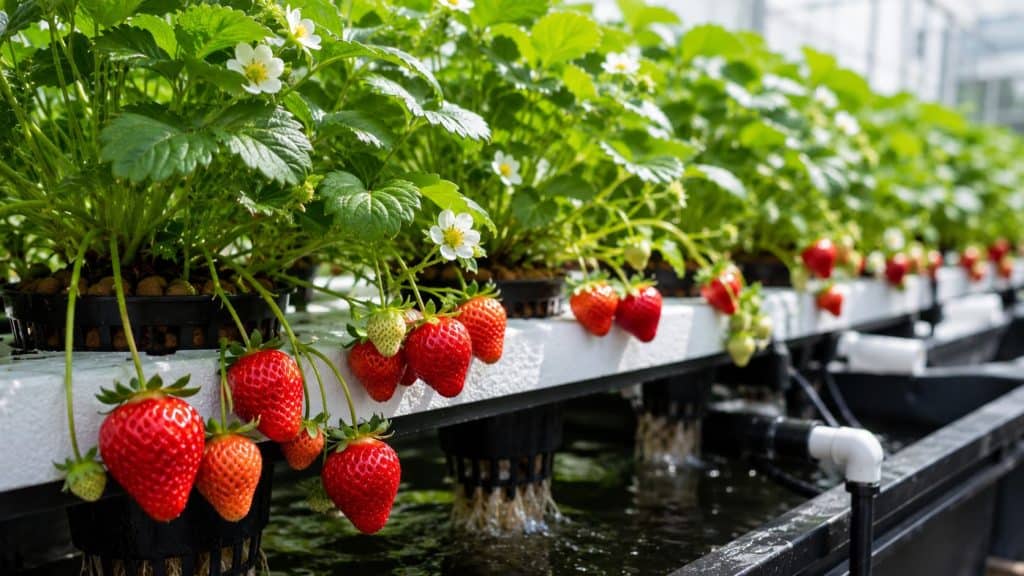
Yes, but they require careful oxygen management.
Among all ebb and flow hydroponics plants, strawberries present an interesting edge case.
Strawberries require careful root-zone management because proper oxygen levels help maintain healthy roots and support consistent growth. This makes good drainage and aeration especially important in ebb and flow systems.
Common strawberry recommendations include:
- EC range: EC recommendations for strawberries typically range 1.0–1.8 mS/cm, though optimal levels vary by variety and growth stage
- Flood intervals for strawberries typically range 2–4 hours during daytime, reduced at night
- Excellent drainage media
- Maintain reservoir temperatures between 18–22°C (65–72°F) to support healthy strawberry roots and reduce disease pressure
Growers frequently report success with expanded clay substrates because they maintain moisture while allowing substantial airflow after drainage.
Of course, strawberries can also perform well in vertical towers and NFT systems. Still, many commercial growers continue using ebb and flow basin plants because flood cycles provide strong nutrient delivery while preserving oxygen access.
The key variable is timing. Excessive flooding often creates more problems than insufficient irrigation.
What Annual Flowers Grow Well in Ebb and Flow?
Many ornamental flowers adapt successfully. Most bedding plants complete production cycles within several weeks, making them suitable for automated flood-bench systems.
Ebb and flow indoor plants are not limited to vegetables and herbs. Some commercial crops can also perform well in ebb and flow systems.
Cannabis is often grown commercially in controlled environments using flood-and-drain methods because growers can adjust irrigation schedules, nutrient delivery, and root-zone conditions to match plant requirements.
Common ornamental choices include:
- Marigolds
- Petunias
- Zinnias
- Pansies
- Roses
- Cannabis (commercial controlled-environment crop)
One advantage involves disease management. Water enters from below, leaving foliage relatively dry. This may reduce disease pressure compared with overhead irrigation methods.
Closed-loop hydroponic systems can significantly reduce water use compared with traditional soil cultivation by recycling water and nutrients.
Commercial greenhouses often use flood-and-drain benches for bedding plants because irrigation can be automated across large production areas.
What Plants May Be Better in Other Hydroponic Systems?
Not every crop gains a major advantage from ebb and flow. Some crops perform similarly or occasionally better in alternative hydroponic systems.
Some crops may also perform well in other hydroponic systems. For example, large lettuce farms often use NFT, while some large vining crops may benefit from drip irrigation for more precise nutrient delivery.
Large-scale tomato and pepper operations sometimes prefer drip systems because irrigation volumes can be adjusted with greater precision.
Drip systems use individual emitters to deliver water and nutrients directly to each plant, allowing precise irrigation control.
That does not mean ebb and flow is ineffective.
In fact, one reason ebb and flow greenhouse plants remain popular is versatility. A single flood-and-drain setup can support leafy greens, herbs, flowers, and fruiting crops without extensive redesign. For growers comparing different approaches, an efficient hydroponic system is often one that balances crop flexibility with consistent root-zone management.
Growers seeking flexibility often favor ebb and flow over highly specialized systems.
What Causes Most Ebb and Flow Failures?
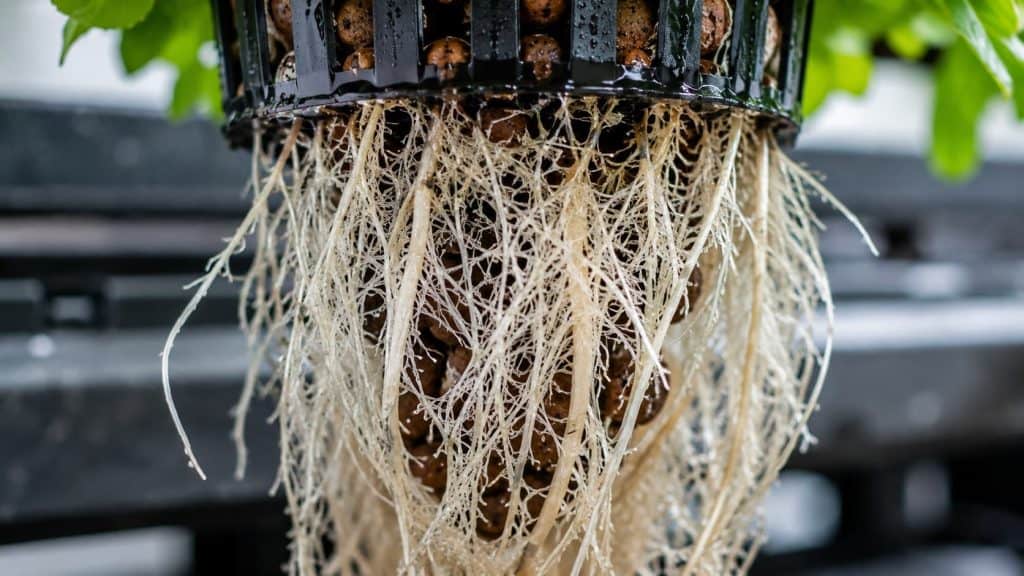
Poor drainage and excessive moisture create most problems.
The majority of system failures trace back to root-zone oxygen shortages.
When roots stay saturated for extended periods, oxygen levels decline and root diseases such as Pythium become more likely. Pythium, one of the most common hydroponic diseases, becomes highly active between 20°C and 30°C according to hydroponic disease management guidance.
Common warning signs include:
- Brown or soft roots instead of firm, healthy roots
- Wilting even when the growing media remains wet
- Yellowing leaves caused by poor root function
- Slow growth due to reduced oxygen availabilit
How growers reduce risk:
- Improve drainage
- Monitor reservoir temperatures and keep nutrient solution below 24°C (75°F), since warmer water holds less dissolved oxygen and increases root disease risk
- Avoid excessive flooding
- Increase root oxygenation
- Inspect roots regularly
One recurring observation across grower forums involves overwatering. New growers frequently flood too often because they assume more nutrients equal faster growth.
In practice, healthy drainage frequently matters more than additional irrigation cycles.
How Important Is Growing Media Selection?
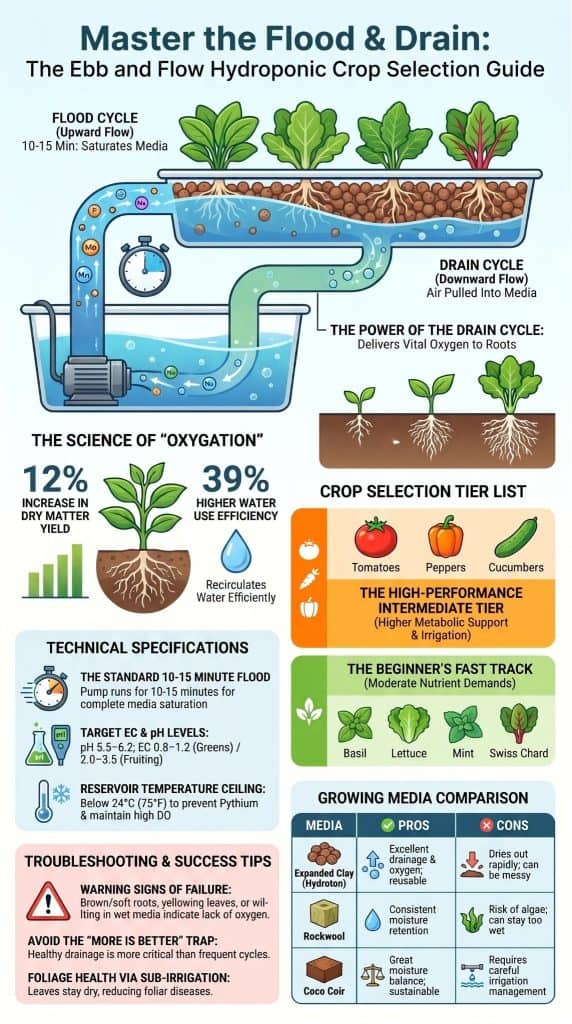
Media choice influences water retention, oxygen levels, and flood frequency. Among the most important hydroponic system items, growing media directly affects how quickly roots receive oxygen after each flood cycle.
The growing medium determines how long moisture remains around the roots after flooding.
Expanded Clay Pellets (Hydroton)
Pros:
- Excellent drainage
- High oxygen availability
- Reusable
- Ideal for ebb and flow substrate plants
Cons:
- Can be messy
- Dries rapidly
Rockwool
Pros:
- Strong moisture retention
- Consistent structure
Cons:
- Can remain wet longer
- Increased algae risk under certain conditions
Coco Coir
Pros:
- Good moisture balance
- Sustainable option
Cons:
- Often benefits from added perlite
- Requires closer irrigation management
Perlite is another common flood-and-drain substrate because it improves drainage and increases air-filled porosity within the root zone.
Vermiculite retains more moisture than perlite and is often blended with other media to balance water retention and aeration.
Grodan rockwool products and Hydroton expanded clay pellets remain two of the most recognized materials used in ebb and flow inert substrate systems.
From our experience, expanded clay remains the safest starting point for beginners because drainage characteristics are easy to predict.
What Flood Schedule Works Best for Different Plants?
The ideal schedule depends on crop size, media, and climate.
Flood duration should be adjusted based on crop type, growing media, and root development. Most ebb and flow systems work well with short flooding periods that fully saturate the root zone while allowing enough drainage for oxygen exchange.
Leafy greens such as lettuce commonly perform well around 0.8–1.2 mS/cm EC, while fruiting crops like tomatoes often require higher nutrient levels as they enter the production stage. Maintaining a pH range around 5.5–6.2 helps support nutrient availability.
| Crop | Typical Daytime Flood Interval |
| Lettuce | Every 2-3 hours |
| Basil | Every 3-4 hours |
| Strawberries | Every 2-3 hours |
| Tomatoes | Every 2 hours |
Most flood cycles last 10–15 minutes, long enough to saturate the root zone before complete drainage begins. Most growers reduce irrigation frequency during nighttime hours.
Flood frequency is typically controlled by a programmable cycle timer that activates the pump throughout the day. The ideal schedule keeps media moist but never continuously saturated between cycles.
Media should become saturated during the flood cycle while still allowing rapid drainage afterward.
A common beginner question concerns whether every drop of water must drain from the tray.
The answer is no. Most water should drain, but the media should retain enough moisture to prevent root dehydration between cycles.
Monitoring ebb and flow pH monitoring and EC levels alongside irrigation timing often produces more consistent results than focusing on any single variable.
Which Plants Should You Start With First?
Beginners usually succeed fastest with herbs, lettuce, basil, and strawberries. The simplest entry point involves crops with moderate nutrient demands and forgiving growth habits. These beginner crops are often recommended for people getting started as beginners in hydroponics because they tolerate minor mistakes while still producing reliable growth.
Best Beginner Crops
- Basil
- Lettuce
- Mint
- Swiss chard
- Strawberries
Best Intermediate Crops
- Tomatoes
- Peppers
- Cucumbers
Hydroponic cultivation can support faster and more consistent plant growth than traditional soil cultivation when environmental conditions are carefully managed.
A beginner who masters basil and lettuce often develops the skills needed to handle larger fruiting crops later.
Understanding the Basics of Hydroponic Growing Systems

Credits: Everything Hydroponics
This video explains the basic concepts of hydroponics and how plants can grow without traditional soil by using water, nutrients, and controlled growing environments.
It highlights the main components of hydroponic systems, including nutrient solutions, root support, and different growing methods.
The video also discusses how hydroponics can improve plant growth by providing direct access to essential nutrients while allowing growers to manage water, oxygen, and growing conditions more efficiently.
FAQ
Can I grow ornamental flowers and vegetables in the same flood tray?
Yes, but match your targets carefully. While marigolds, petunias, and basil tolerate similar watering intervals, keep a close eye on your salt levels (EC). Flowering annuals will show leaf tip-burn if you feed them at the higher nutrient concentrations required for heavy-fruiting tomatoes.
Which substrates work best for plants for ebb and flow hydroponic systems?
The best substrates for plants for ebb and flow hydroponic systems balance water retention with rapid drainage. Expanded clay plants ebb flow setups provide excellent root aeration and durability. Perlite plants ebb flow systems drain quickly and help prevent excess moisture. Coco coir ebb flow plants benefit from improved water retention, while rock wool ebb flow plants receive consistent moisture distribution. Each substrate supports root development differently, so growers should choose based on crop requirements.
Do fruiting crops need different care in ebb and flow systems?
Yes, fruiting crops often need different management as they move through each growth stage. During the ebb and flow vegetative stage, plants focus on producing leaves and stems. During the ebb and flow fruiting stage, crops such as ebb and flow tomatoes, ebb and flow peppers, ebb and flow cucumbers, and ebb and flow strawberries require higher nutrient uptake and stable environmental conditions. Consistent irrigation and proper nutrient levels help support flowering, fruit set, and fruit development.
How important are pH and nutrient checks in ebb and flow hydroponics?
Regular monitoring is essential for healthy ebb and flow hydroponics plants. Ebb and flow EC levels indicate whether plants receive the correct nutrient concentration, while ebb and flow pH monitoring helps ensure nutrients remain available for root absorption. Because the flood cycles wash directly over the naked root system multiple times a day, any imbalance in your reservoir is instantly amplified. An uncalibrated pH pen or an unchecked spike in EC can lock out vital elements or burn your root tips within 48 hours.
Which crops are considered the best plants for ebb and flow systems?
Many growers consider leafy greens among the best plants for ebb and flow systems because they grow quickly and adapt well to flood-and-drain conditions. Popular choices include ebb and flow lettuce, ebb and flow spinach, ebb and flow arugula, ebb and flow kale, and other ebb and flow salad greens. These crops benefit from ebb and flow root oxygenation and efficient nutrient delivery, allowing them to produce consistent harvests in both home and commercial growing environments.
Final Thoughts on Choosing Plants for Ebb and Flow Systems
If your plants struggle with slow growth or weak roots, the growing system may be part of the problem. Ebb and flow helps deliver nutrients while giving roots access to more oxygen between flood cycles.
That matters. The best results usually come from choosing crops that respond well to this root environment, not simply picking the most popular plants. When you pay attention to flood timing, growing media, and drainage, it’s easier to support healthy growth and get more reliable harvests from one season to the next.
As controlled-environment agriculture (CEA) expands, ebb and flow remains a versatile option for growers managing diverse crops within a single hydroponic system
References
- https://acquire.cqu.edu.au/articles/journal_contribution/Oxygation_of_the_rockwool_substrate_for_hydroponics/13426163?file=25829924
- https://extension.oregonstate.edu/catalog/pub/em-9458-hydro-hints-ebb-flow
Related Articles
- https://tophydroponicgarden.com/best-plants-for-beginners-in-hydroponics/
- https://tophydroponicgarden.com/most-efficient-hydroponic-system/
- https://tophydroponicgarden.com/items-needed-for-hydroponic-system/
Was this helpful?
I’m Barrie L., a passionate hydroponic gardening enthusiast dedicated to cultivating thriving, soil-less gardens. With a focus on all things hydroponic, I share my expertise on innovative growing techniques and sustainable practices through my blog, tophydroponicgarden.com. As a seasoned hydroponics specialist, my goal is to inspire and guide fellow gardeners in harnessing the power of water-based cultivation for bountiful and eco-friendly harvests. I’m also an author of the book “Hydroponics For Absolute Beginners: Your Step By Step Guide For How To Create An Hydroponics System At Home Without Soil, For Growing Vegetable, Fruit And Herbs.” which is sold on Amazon. Join me on a journey of redefining the way we cultivate plants, one nutrient-rich solution at a time. Happy growing!